


Complex and revision spine surgeries are sometimes necessary to address a spectrum of challenging spinal conditions and complications that can’t be managed conservatively or with routine procedures.
Whether it’s a deformity that progresses despite bracing or pain that persists after an initial fusion, Texas Back Institute stands ready to tailor advanced surgical solutions to each patient’s unique anatomy and history.
Complex or revision spine surgery provides hope when other options haven’t worked. It means navigating scar tissue, past procedures, and high stakes with precision and purpose. At Texas Back Institute, experience meets empathy, and the goal isn’t just mobility, it’s about trust, relief, and a second chance at living pain-free.
Have you had spine surgery in the past and are still experiencing pain that the surgery was supposed to correct? You may need revision surgery. Texas Back Institute specializes in this type of surgery. Click here to set an appointment.
The Specialist Behind Solutions
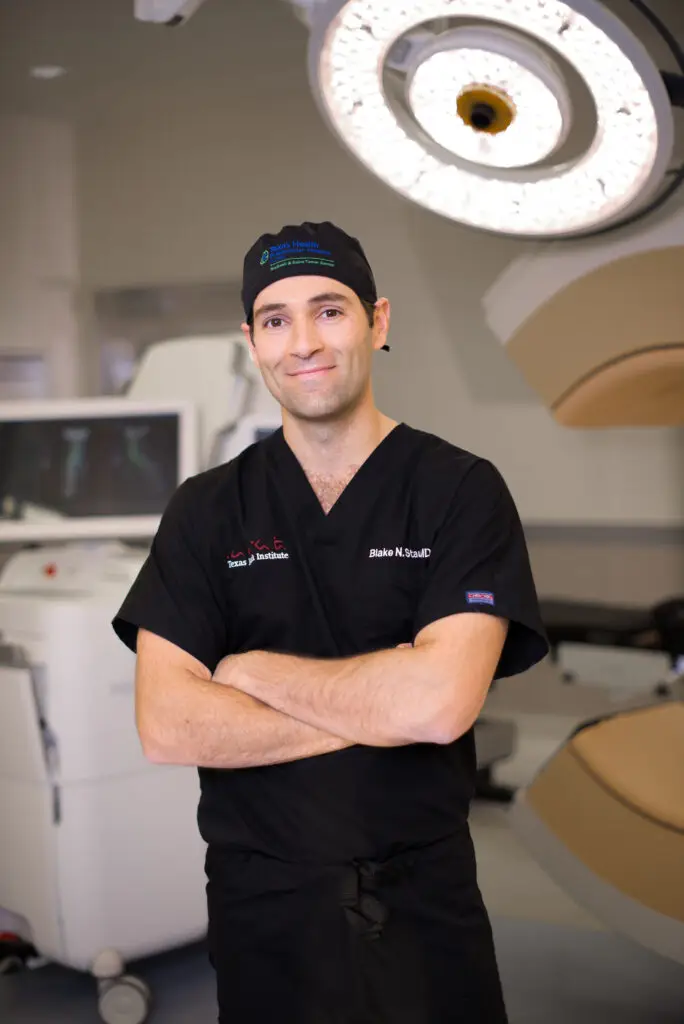
Dr. Blake Staub is a neurosurgeon at the Texas Back Institute who specializes in complex and revision spine surgery. Widely recognized as a spine revision specialist, Dr. Staub has dedicated his career to helping patients who continue to suffer after previous procedures. These are patients who feel their back surgery didn’t work. His focus is on individuals facing chronic neck or back pain post-operation or those advised to undergo a second surgery.
Complex spine surgery involves procedures that go far beyond basic decompressions or discectomies. These are surgeries meant to correct spinal deformities, failed fusions, infections, tumors, hardware complications, or multi-level degenerative conditions. It’s a high-stakes, high-skill field that demands detailed planning, experience, and precision.
Dr. Staub says his mission is clear – to provide hope and solutions for patients who’ve been told they have none.
“Here at the Texas Back Institute, I specialize in all aspects of revision spinal surgery, including scoliosis, revision surgery, flat back syndrome, and the full spectrum of complex spinal complications,” Dr. Staub said.
“Most spine surgeries are relatively straightforward; however, complex spine surgery often means performing revision spinal surgery. This means navigating scar tissue, correcting failed fusions or malpositioned spinal hardware, and restoring distorted anatomy. These patients complain of chronic pain, deformity progression, or nerve compression. Treating failed back surgery syndrome requires advanced training, 3D surgical planning, and the ability to understand what went wrong in the first operation—and how to fix it.”
When the Pain Doesn’t Go Away
What determines whether someone has chronic neck or back pain? Medically, it’s defined as pain lasting more than three months. If the pain continues six to twelve months after spine surgery, it’s considered chronic. Common causes include unresolved nerve compression, spinal instability, a nonunion (failed fusion), or flat back syndrome.
Dr. Staub takes pride in the attention to detail it takes to correct previous surgical complications, restoring alignment, decompressing nerves, and creating a durable foundation, so another revision won’t be necessary down the line.
“Every case is different,” he said. “Some patients benefit from advanced physical therapy or targeted injections. Others require a surgical solution—whether that’s osteotomies, fusion extensions, or hardware revision. The goal of revision spine surgery is to apply the right solution to the right problem at the right time.”
Signs it’s Time to Reevaluate
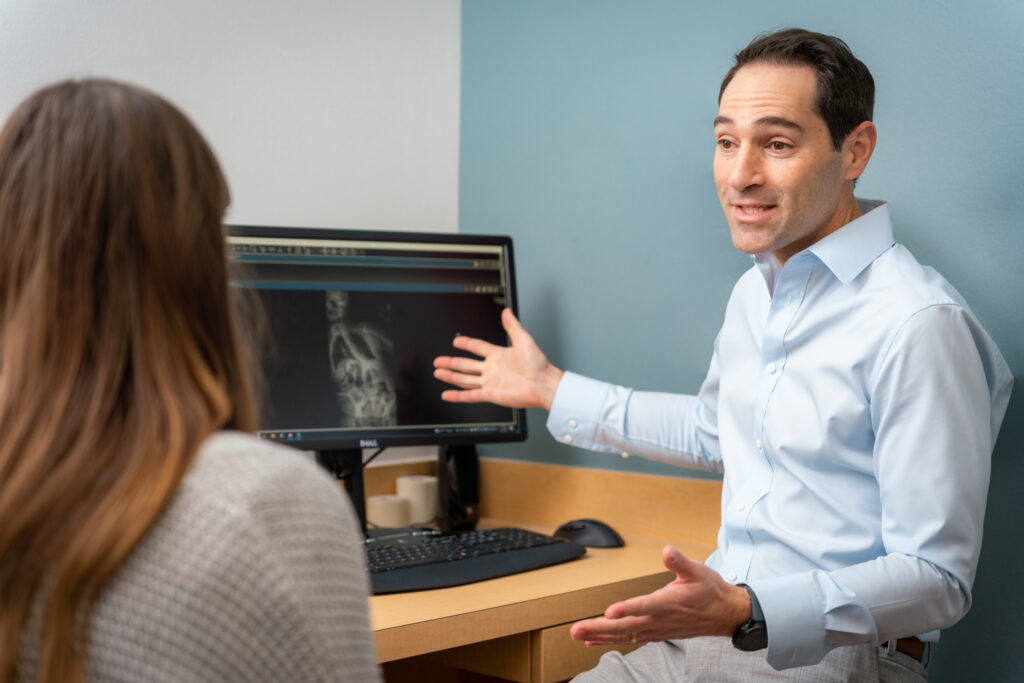
Failed spine surgery isn’t always obvious, but your body often knows there’s a problem even before scans can confirm it. New or worsening arm or leg pain, numbness, chronic neck or back pain, postural changes, or trouble holding your head upright can all be red flags.
“If you’ve been told that everything looks fine, but you’re still suffering, it’s time to seek a second opinion,” Dr. Staub said. “These symptoms may point to unresolved issues that require the expertise of a complex spine surgeon.”
Spinal fluid leaks, or CSF leaks, can occur after surgery and are often inadequately addressed. Dr. Staub notes, “Symptoms may include headaches, dizziness, or visible drainage. These leaks happen when the protective membrane around the spinal cord is inadvertently punctured or fails to seal properly, allowing fluid to escape. While some leaks are identified and repaired during surgery, others may go unnoticed or are inadequately addressed, leading to persistent symptoms.”
If a patient experiences these symptoms after spine surgery, especially if they’re worsening or persistent, it’s important to consult a spine specialist familiar with diagnosing and managing CSF leaks.
“I frequently manage some of the most challenging spinal fluid leaks, especially those that persist after failed repairs,” Dr. Staub said. “If you’ve been told your leak can’t be fixed, please reach out to us. We specialize in treating this often-overlooked issue.”
You Deserve a Second Opinion
When it comes to advanced spinal conditions like adult spinal deformity, revision surgeries, or persistent spinal fluid leaks, expertise and experience matter. These cases are incredibly intricate and require more than standard training. They demand years of specialized experience, advanced technology, and a deep understanding of how the spine affects your whole body and quality of life.
“Very few surgeons perform complex revision spine surgery—it is technically demanding, carries higher risk, and requires years of advanced training and surgical volume,” said Dr. Staub. “I’ve spent more than a decade focusing exclusively on spine deformity and revision cases. From broken hardware and migrated cages to spinal fluid leaks and multi-level collapse, I manage the most severe complications every day. This is my full-time specialty, and every case gets the attention it deserves.”
The Path Forward
For patients facing complex conditions, the path forward can feel uncertain. When the stakes are high and the answers feel out of reach, it is important to trust a specialist who sees the full picture and treats every case with the attention it deserves. Your spine is central to your life. Let the quality of your care reflect that.
Watch the interview with Dr. Staub below.
With complex revision surgery, advanced training and many years of experience are critical to success. A spine specialist like Dr. Staub is ready to help you. Click here to set an appointment today.