

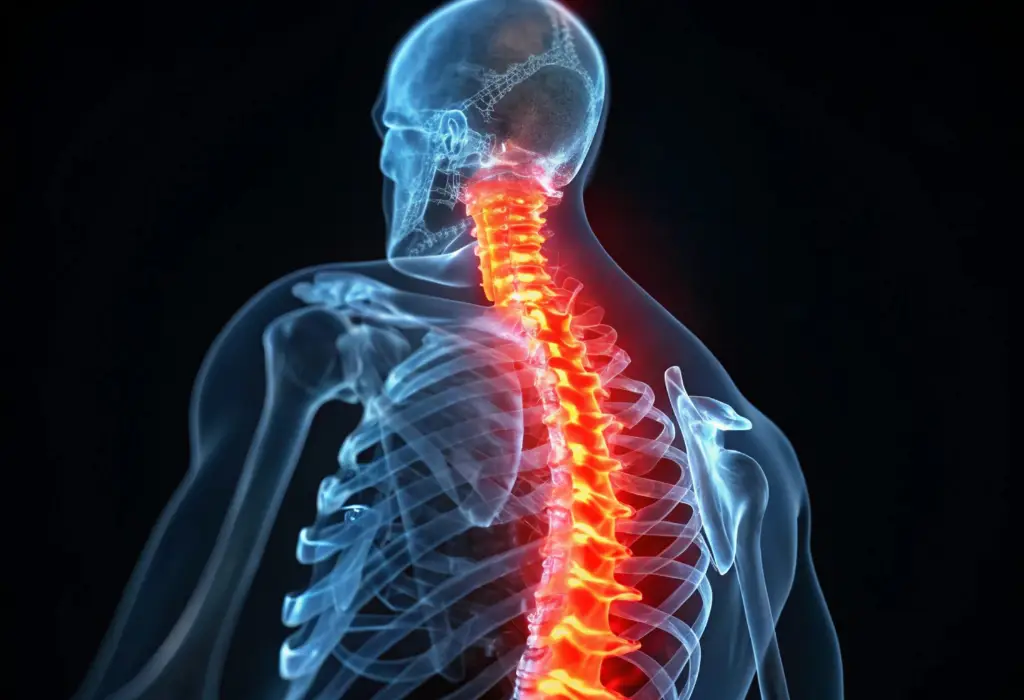
After more than a decade of research, scientists from the Texas Biomedical Device Center at The University of Texas at Dallas demonstrated unprecedented rates of recovery for spinal cord injuries. This study offers hope to patients who struggle daily with these injuries.
According to an announcement from the research team, “In this study, published in the prestigious journal Nature, individuals with incomplete spinal cord injury safely received a combination of stimulation of a nerve in the neck with progressive, individualized rehabilitation. This approach, called ‘closed-loop vagus nerve stimulation’ (CLV), produced meaningful improvements in arm and hand function in these individuals.”
What This Means for You — Estimates for the number of people living with spinal cord injuries (SCI) in the U.S. vary, but the most commonly cited range is between 250,000 and 450,000 people. Annually, there are an estimated 17,000 to 18,000 new SCIs in the U.S., with motor vehicle accidents, falls, and violence being the leading causes. If you or a loved one is a part of this group, this story will give you hope. Please read on.
The neurosurgeons at Texas Back Institute are some of the most experienced spine specialists in the world. They are constantly looking for innovative, safe ways to help patients recover from life-threatening spinal injuries. If you need spinal cord treatment, click here to set an appointment with an expert.
The Vagus Nerve Is Critical to This Research
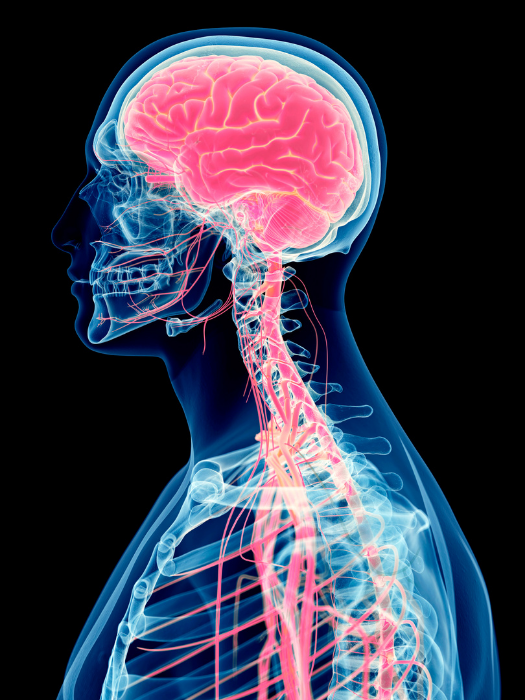
In many ways, these findings are eye-popping to neurosurgeons and other neurological specialists, bioengineering scientists and (most importantly) the patients whose spinal cords have been injured, resulting in partial or total paralysis. At the center of these results is the vagus nerve.
According to international press reporting, “The unprecedented results position the UT Dallas scientists to proceed with a pivotal trial — the final hurdle on the road to potential Food and Drug Administration (FDA) approval of vagus nerve stimulation for treatment of upper-limb impairment due to spinal cord injury.
“This approach is based on over a decade of neuroscience and bioengineering efforts by investigators at UT Dallas. The therapy uses electrical pulses sent to the brain via a tiny device implanted in the neck and timed to occur during rehabilitative exercises. Previous work by these researchers has demonstrated that stimulating the vagus nerve during physical therapy can rewire areas of the brain damaged by stroke and lead to improved recovery.”
A TBI Neurosurgeon Offers Insights Into this Breakthrough
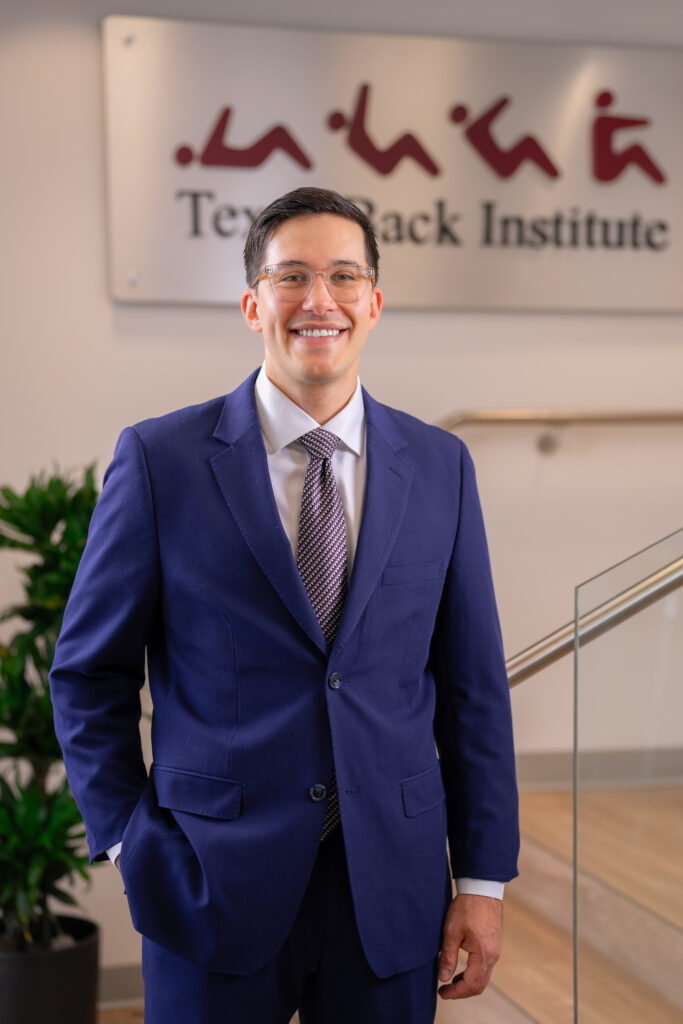
Dr. Alejandro Carrasquilla is one of the neurosurgeons at Texas Back Institute. In his practice, he specializes in treating patients with medical issues related to the spine and/or brain. These can include a loss of mobility due to disease or injury affecting the nerves from the brain or the spinal cord. He has a comprehensive understanding of the workings of the vagus nerve.
“The vagus nerve is the 10th of 12 cranial nerves,” Dr. Carrasquilla noted. “They are called cranial nerves because they emerge intracranially rather than emerging from the spine like most nerves The vagus nerve is unique among cranial nerves because it innervates (controls) the most organs in the body.”
“While many cranial nerves go to the head and neck alone, the vagus nerve goes to throat but also the heart and the intestines, both receiving information and transmitting information. It is a key part of our autonomic nervous system, which reacts to stimulus, both the sympathetic and parasympathetic nervous systems. These systems provide our ‘fight or flight’ response. It regulates our digestion, blood pressure, breathing, heart rate, and therefore has significant influence on the body.
“The vagus nerve also plays a role in inflammation. In fact, there is FDA approval for vagal nerve stimulation in the treatment of rheumatoid arthritis. All these functions together make the vagus nerve powerful in combating several different diseases and ailments.”
The Methodology of this Research
When asked about the methodology and potential benefits of this UT Dallas research, Dr. Carrasquilla said, “This was a small randomized controlled trial where 10 patients received the closed-loop vagal (CLV) stimulation, and 9 patients received so-called ‘sham stimulation’ as controls. The results are an exciting indication that CLV stimulation may provide benefit in recovery from incomplete spinal cord injury.
“These patients were treated with CLV stimulation at least a year after their injury. The authors point out that these results are similar to a study which found benefit of vagal nerve stimulation in recovery from stroke, and that therapy is now FDA-approved. These are exciting applications of vagal nerve stimulation. Larger clinical trials would more clearly demonstrate the benefit and allow us to assess when vagal nerve stimulation may be most beneficial after the injury.”
What Part Does “Neuroplasticity” Play in These Findings

One of the most fascinating aspects of the human brain is its ability to “rewire” itself after it is injured. The research points to this “neuroplasticity” of the brain as a reason for patient success when physical therapy and vagus nerve stimulation are combined.
So, what is neuroplasticity and how does it work in the brain?
“Neuroplasticity is a term that describes the nervous system’s ability to remodel and adapt, “Dr. Carrasquilla said. “For a long time, it was believed that the brain and spine could not remodel itself in order to recover from an injury or trauma. However, research and experience have shown that the brain and spinal cord have some degree of neuroplasticity.
“While the neurons that die off typically do not regrow, the nervous system does have some ability to rewire some functions. This is dependent on a ‘reserve’ of neurons, synapses and circuits that may strengthen and manage a function that a larger set of related neurons may have managed prior to the injury.
“It is important to note that the study specifically looked at ‘incomplete’ spinal cord injuries. These patients had some degree of function after their injury, and the vagal nerve stimulation aided neuroplasticity to optimize their recovery of function when coupled with physical rehabilitation.
“Additionally, studies have shown benefit in recovery from stroke. These findings together led to this randomized controlled trial (RCT) in patients with incomplete spinal cord injury and together make up a body of literature demonstrating benefits of VNS on neuroplasticity and recovery of the nervous system. It is important to note that VNS was not used alone in any of these studies. Rehabilitation and physical therapy were combined with VNS so that the closed-loop VNS augmented the benefit of the rehabilitative process.”
The Treatment Showed Benefits to the Arms Only

The research noted that this spinal cord treatment works for improving mobility of arms, and no other parts of the body connected to the spine. Why is this?
“This is an interesting question,” he said. “The studies use a very specific protocol for measuring arm function and were able to best quantify and measure arm strength and function. It may be that there is a benefit in other parts of the body. However, it is also important to note that the axons and neuronal connections to the legs are longer pathways than those to the arms. Therefore, it is a longer path that would need to recover, which may be more challenging or may take more time to measure.”
The Impact of the Vagus Nerve Treatment in the Future
The spine experts at Texas Back Institute have been at the forefront of numerous treatment innovations including artificial disc replacement, ultra-minimally invasive spine surgery, surgical robotics and artificial intelligence for diagnostic and treatment of spinal conditions, just to name a few.
Does this vagus nerve stimulation, in conjunction with physical therapy hold promise for the treatment of spinal cord injuries? Dr. Carrasquilla is cautiously optimistic.
“It is important to note how many functions the vagal nerve has and how numerous the applications of vagal nerve stimulation appear to be,” he said. “For example, vagal nerve stimulation has been used for controlling medication-resistant epilepsy and seizures.
“This research, which suggests that vagal nerve stimulation increases neuroplasticity, has been shown in stroke and spinal cord injury, and it may have further applications that will be revealed in future research. Additionally, some groups have shown that vagal nerve stimulation decreases inflammation and may be useful to treat rheumatic and auto-immune conditions.
“Altogether, this shows how vast the influence of the vagus nerve is in the body and represents exciting, promising applications harnessing the vagus nerve to treat different conditions. It is a fascinating body of work, and I am excited to continue developing these applications and to bring potential benefits to patients,” he concluded.
Treating neurological conditions with surgery requires extensive training and attention to highly detailed diagnoses and treatment. If you or a family member needs this type of specialized care, click here to set an appointment with a specialist at Texas Back Institute.