

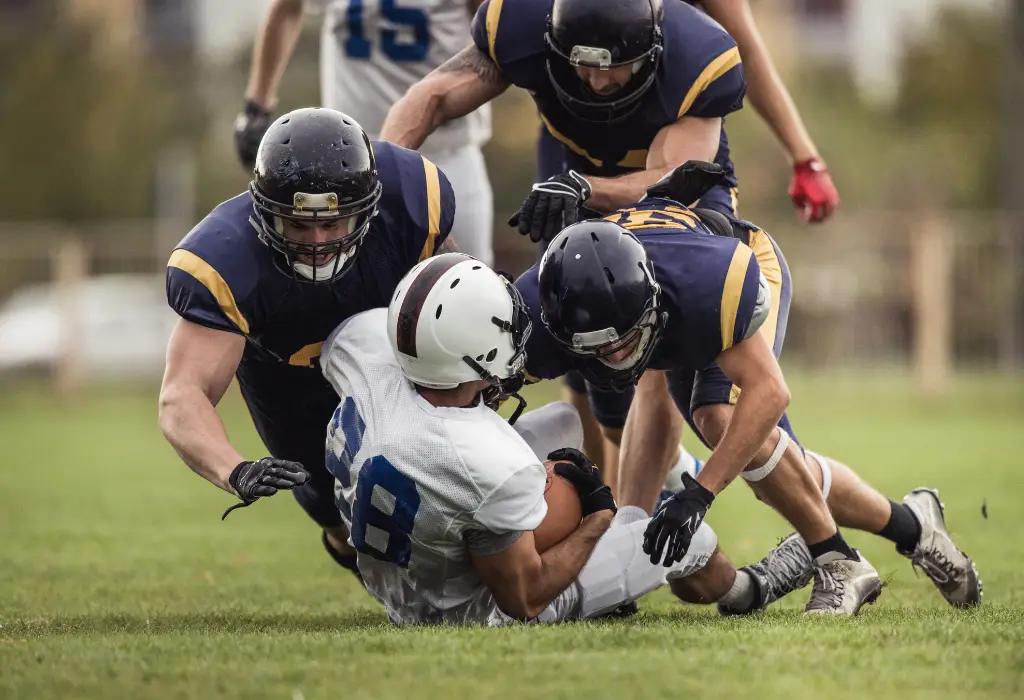
After his days as a Texas high school football legend at Plano Senior High School, Billy Ray Smith, Jr. became an All-American for Arkansas. After his remarkable college success, he enjoyed a 10-year career with the San Diego Chargers in the NFL as an All-Pro linebacker. Sadly, Smith passed away on July 29, 2026.
In an ESPN report, the family said, “It is with profound sadness that we share the loss of our beloved Billy Ray Smith Jr., who passed away peacefully surrounded by family, Billy Ray faced his long journey with dementia caused by CTE with unmatched bravery, dignity, and strength. Billy Ray brought so much joy, light, and laughter to the world as a devoted father, husband, son, and loyal friend.”
Even with specially designed anti-concussion helmets, rule changes and a strict adherence to head-injury prevention, Billy Ray Smith, Jr. was one of hundreds of former professional football players who have died from this injury. According to USA Today, “Boston University’s CTE Center diagnosed 345 cases of CTE in the 376 former NFL players’ brains it’s studied since 2008 – a rate of 91.7%.”
ESPN reported that Smith’s death is a cautionary tale for anyone, football player or not, male or female, who is exposed to repetitive blows to the head, “CTE is a degenerative brain disease that has been found in athletes in contact sports, combat veterans and others exposed to repetitive head trauma. It has been known to cause violent mood swings, impulsive behavior and depression. It is only formally diagnosed with a tissue sample after death.”
An Expert on Treating Brain Injuries Examines CTE

Alejandro Carrasquilla, M.D. is a Neurosurgeon who specializes in neurosurgery oncology at the Texas Back Institute in Plano, Texas. He emphasizes safety in operations, tailoring approaches, innovation and applying surgical adjuncts strategically for best outcomes.
Dr. Carrasquilla notes, “Chronic traumatic encephalopathy (CTE) is a degenerative brain condition resulting from frequent head strikes over a number of years. It is linked to contact sports, but it can occur with any form of significant, near-concussive, repetitive head strikes.”
Not every contact sports athlete experiences this condition.
“This condition only occurs in a subset of people who experience frequent head strikes. A number of factors contribute, such as the frequency and severity of the head strikes, genetics, and other behavioral and environmental factors that may affect brain health. The chronic symptoms and sequelae of CTE are often managed by a neurologist. As a neurosurgeon, I treat brain trauma urgently in the hospital setting. As such, neurosurgeons and neurologists are both experts in different aspects of brain trauma, and the needs of the patient dictate which specialist is most appropriate.”
The “Big Hitter”
In his long career, Billy Ray Smith, Jr. was frequently referred to as a “big hitter” from his position as a linebacker. This begs the question: Are there positions in football that are more (or less) likely to sustain more head injuries?
Dr. Carrasquilla said, “While there have been survey studies where players in some positions of football self-report more head strikes, the incidence of chronic traumatic encephalopathy has not clearly correlated with specific positions in football.
“One survey study found that linemen report more frequent, low-magnitude head impact. However, neuropathological studies have not correlated the diagnosis of CTE to a specific position.

What Can Coaches and Parents Do About Head Trauma in Sports?
“The responsibility of reducing head injuries lies with everyone involved with the sport,” he said. “Of course, coaches and parents should teach players to avoid head strikes and protect themselves from these blows to the head.
“In addition, football associations must continuously evaluate and refine our approach to preventing head strikes. Referees need to rigorously enforce the rules against head strikes. Plus, protective equipment must be utilized adequately, and the companies that manufacture this equipment should continue evolving these products. For example, head gear is one important component, redistributing the force of the impact so that less gets transmitted to the skull. It may help decrease the severity of a head injury but may not prevent it completely and therefore cannot be the only means for preventing head injuries.”
“Football is just one of several sports where there is a possibility of head injuries that might lead to brain damage. Any contact sport involving repetitive head strikes such as boxing, mixed martial arts, rugby, hockey, and wrestling can also cause head injury.
“We all need to have some awareness and seriousness about this topic.”
Symptoms of a Dangerous Head Injury
“The symptoms can be acute (in the short term) or chronic, such as in CTE,” Dr. Carrasquilla notes. “In the short term, a concussion can lead to brief loss of consciousness, confusion, difficulty focusing, headache, malaise, nausea or vomiting, light or sound sensitivity, and mood changes.
“Repetitive head impacts can lead to brain degeneration and long-term symptoms. Chronic traumatic encephalopathy is the term that describes this condition. Its symptoms can include memory loss, confusion, difficulty focusing, labile mood (rapid and unpredictable shifts in a person’s emotional state), behavioral changes, impulsivity, irritability, slurred speech, imbalance, tremors, and may lead to dementia. Symptoms can vary by individuals, and the disease can progress in stages.”
Gender and CTE

More than any time in history, women are participating in high school, collegiate and professional sports leagues such as the WNBA and The National Women’s Soccer League. Does the athlete’s gender make it less or more likely contact sports might cause brain injury?
“In the same sport with the same rules, females tend to have higher rates of concussions and post-concussive symptoms for a longer duration. That being noted, many more CTE cases in males have been studied than in females. So, the data appears skewed towards males with incidence of CTE, at least for now,” he concluded.
If a family member or friend has experienced a concussion or other head injury while working or participating in sports, it’s a good idea to have an expert of the brain examine them. To set an appointment with a neurosurgeon such as Dr. Carrasquilla, contact Texas Back Institute.